December 08, 2025
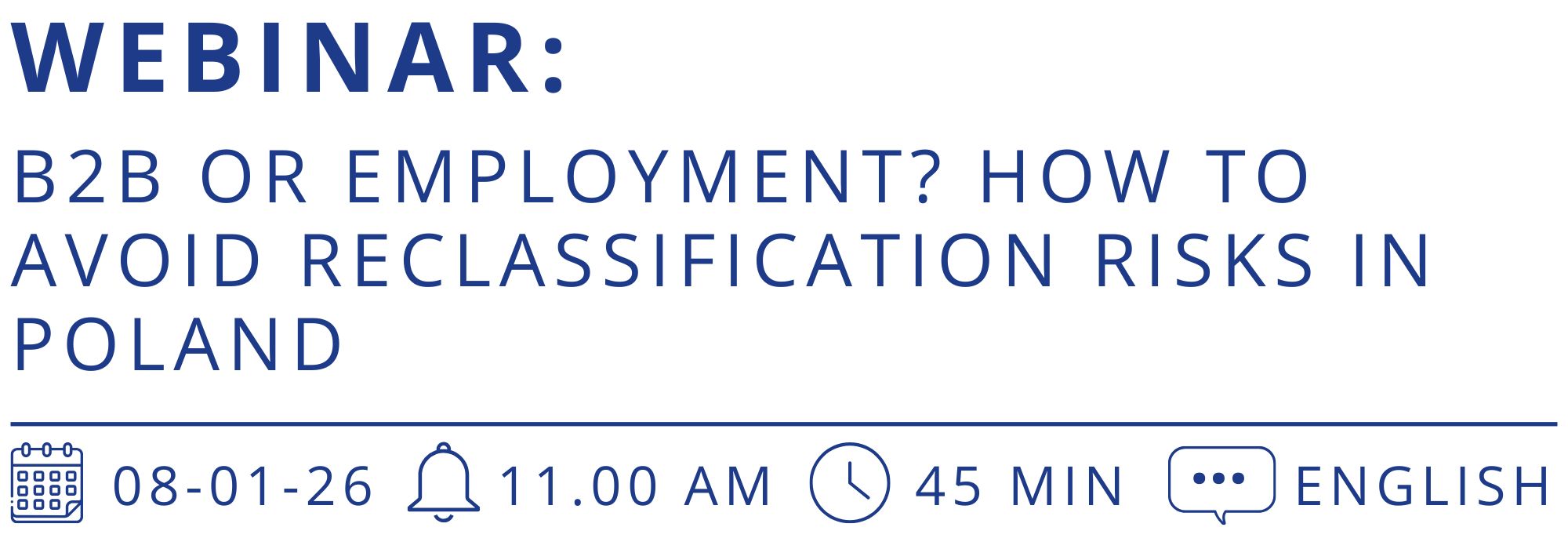
About the webinar
In 2026, Polish businesses will face heightened scrutiny from PIP and ZUS audits, with misclassification risks leading to backdated ZUS contributions, tax liabilities, and fines of up to PLN 90,000 per violation. Existing podcasts and webinars addressing this topic demonstrate strong market interest, focusing on legal frameworks, risks, and compliance strategies.
If there is any doubt that the civil law contracts used within the Polish businesses might conceal employment relationships, it is strongly advisable to conduct a comprehensive internal audit of the HR documentation in order to identify any irregularities before a potential inspection by the PIP.
The distinction between a B2B contract and an employment agreement under Polish law is not easy. It depends primarily on the actual nature of the working relationship rather than its formal contractual terms, although the rights and obligations specified in the contract also play an important role. These differences can be particularly nuanced in cases involving senior management or highly specialised professionals. Key criteria for distinguishing between B2B and employment contracts include:
- Independence of work performance: An employment contract typically requires the employee to adhere to designated working hours and locations, follow the employer’s directives, and operate under supervision. Conversely, under a B2B contract, the contractor exercises autonomy in determining when, where, and how the work is performed and may subcontract or delegate tasks.
- Legal framework: Employment relationships are governed by the Labour Code, which provides statutory protections such as minimum wage, paid leave, and sick leave. In contrast, B2B contracts are commercial agreements that do not grant such employment rights.
- Personal performance obligation: Employees under employment contracts are required to perform their duties personally. In B2B arrangements, the service provider may delegate or subcontract the work unless expressly prohibited by the contract.
To mitigate the risk of reclassification, businesses should ensure that their contractual arrangements, internal policies, and working practices accurately reflect the legal nature of each relationship. To achieve this, managers must understand the process and be able to select the right advisors.
About Woźniak Legal
Woźniak Legal possesses extensive experience advising corporate clients on employment classification matters, representing them during PIP audits, and designing compliant cooperation models for B2B contractors and freelancers working under contracts for specific work. The firm’s expertise covers commercial law, corporate law, employment law, and dispute resolution.
Agenda
1. Introduction
- Overview of Polish contract types: B2B (umowa B2B), specific work (umowa o dzieło), mandate (umowa zlecenie), vs. employment
- 2026 PIP reforms: New powers for immediate reclassification, retroactive ZUS/PIT liabilities, fines for the managers
- Why it matters: Audit risks, cost implications for businesses.
2. Legal Framework & Key Tests
- Labour Code Art. 22 §1 criteria: Subordination, fixed place/time, personal performance, remuneration.
- Substance over form: Courts/PIP prioritize actual practice (e.g., "entrepreneur test" for B2B independence).
- Common pitfalls: Single-client dependency, employer tools/supervision trigger reclassification.
3. B2B vs. Employment
- B2B hallmarks: Multiple clients, self-managed schedules/tools, result-oriented.
- Employment indicators: Directives on how/when/where, no delegation.
- Case examples: IT specialists reclassified due to fixed hours.
4. Specific Work vs. Employment
- Umowa o dzieło: Concrete result (e.g., software deliverable), no supervision/process control.
- Employment agreements: Ongoing duties, no guaranteed outcome.
- Risks: Vague scopes leading to "hidden employment" rulings.
5. 2026 Compliance Strategies & Best Practices
- Audit-proofing: Document independence (invoices, multi-client proof), hybrid models.
- PIP/ZUS inspection prep: Internal HR audits, clause checklists.
- Woźniak Legal services: B2B redesign, audit representation
6. Q&A
Our webinar is available on YouTube on: https://www.youtube.com/watch?v=9IT_GuEYykg
YOU MAY VIEW IT ON OUR WEBSITE
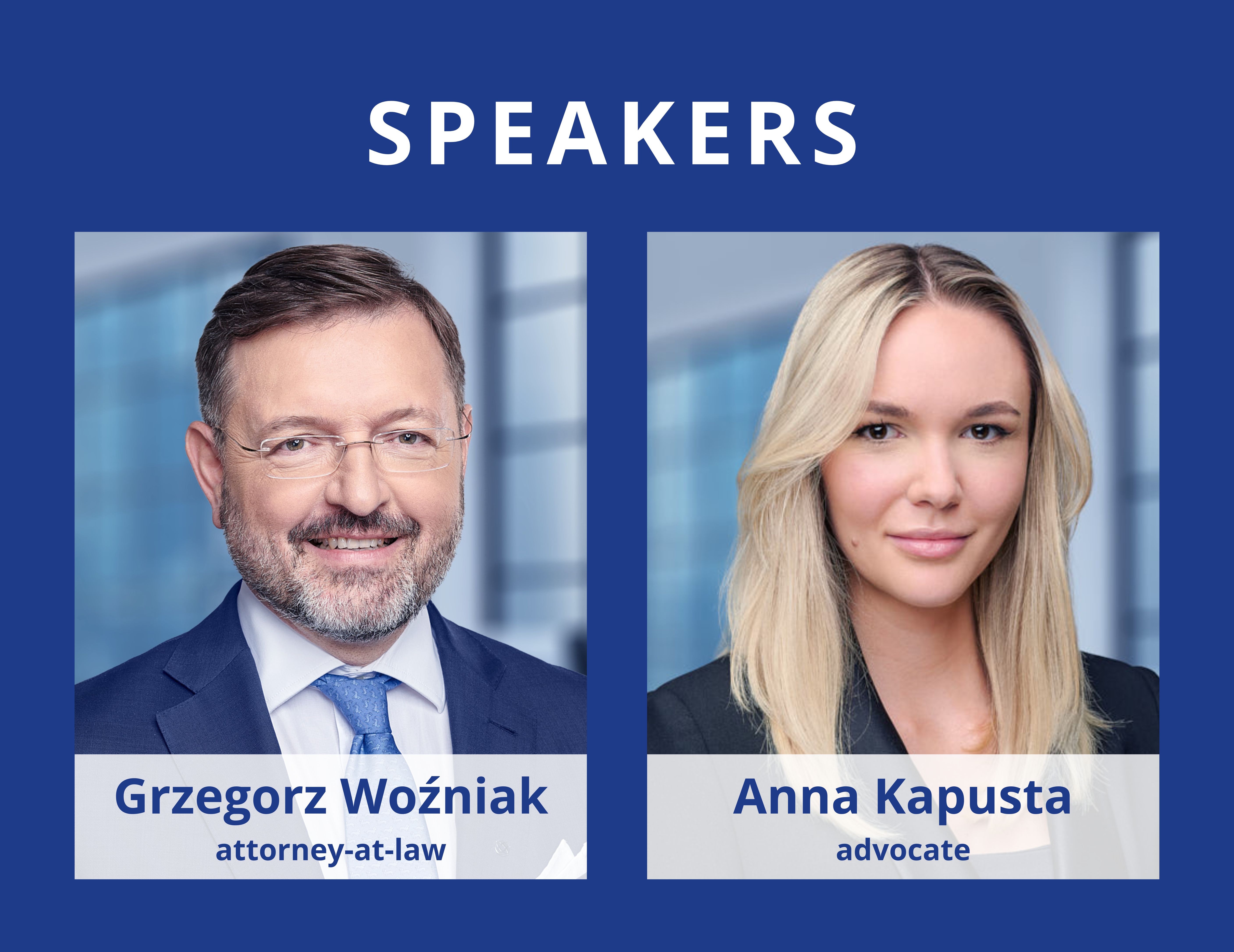
About the Author


Founder and Managing Partner
phone: +48 602 352 580
Read also

April 09, 2026
WEBINAR: B2B Turned Into Empoyment In Your Polish Business?...
From July 2026, Państwowa Inspekcja Pracy (PIP) can reclassify B2B and civil‑law agreements as employment contracts if they display “employment‑like”...
Read more
April 07, 2026
PIP: Ryzyko Przekształcenia Umów B2B oraz Umów Cywilnoprawnych...
Od lipca 2026 r. Państwowa Inspekcja Pracy (PIP) zyskuje uprawnienia do przekształcania umów cywilnoprawnych (w tym kontraktów B2B) w umowy...
Read more
April 07, 2026
What Polish-Site Employers Must Do To Avoid Reclassification...
From July 2026, Państwowa Inspekcja Pracy (PIP) will be able to reclassify civil‑law agreements and B2B contracts as employment contracts...
Read more