April 09, 2026
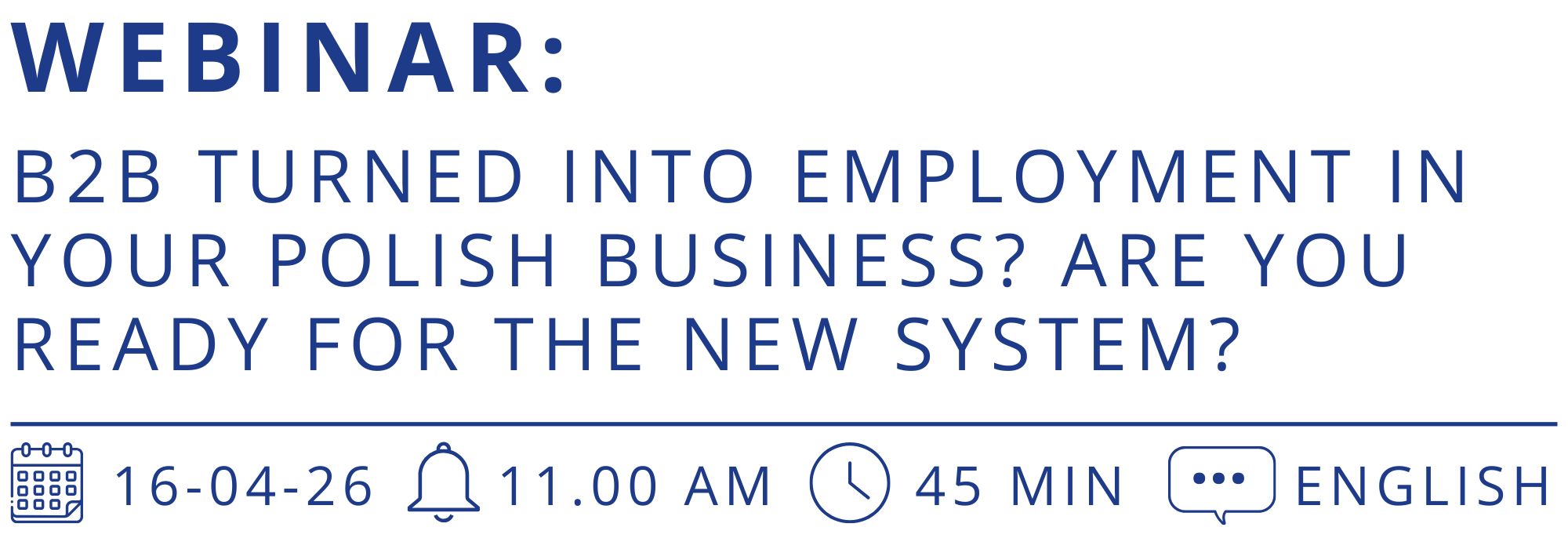
From July 2026, Państwowa Inspekcja Pracy (PIP) can reclassify B2B and civil‑law agreements as employment contracts if they display “employment‑like” features. This means that PIP can issue a binding decision turning a B2B or umowa zlecenia/o dzieło into a full employment if the inspector during the audit determines things like subordination, fixed hours or integration into the employer’s organisation.
What Polish‑site employers should do now
If your company operates in Poland and relies on B2B or civil‑law‑contractor models, July 2026 is not a distant theoretical deadline - it is a trigger date for enforcement risk. Here are the actions that need to be taken:
1. Review all B2B and civil‑law‑contractor arrangements
2. Identify “employment‑like” patterns
3. Adjust contracts, structures, and working practices
4. Document independence of your contractors
Our webinar is available on YouTube on our channel: https://www.youtube.com/@wozniaklegal
YOU MAY VIEW IT ON OUR WEBSITE

About the Author

Founder and Managing Partner
phone: +48 602 352 580

Read also

October 02, 2026
WEBINAR: Doing Business in Poland: Choosing the Right...
Starting a business in Poland begins with a fundamental question: which legal form is right for your business? Polish law offers several...
Read more
October 01, 2026
The Biedronka No-Poach Decision and Hiring Restrictions...
In September 2026, the President of the Polish Office of Competition and Consumer Protection, UOKiK, imposed fines totalling PLN 571,960,550...
Read more
September 17, 2026
What to Do If a Share Transfer in a Polish sp. z o.o....
When selling shares in a sp. z o.o., it is crucial to comply with the required form: a written agreement with signatures certified by a notary...
Read more